
Red Hill extends validation as Asian Battery Metals (ASX: AZ9) refines targeting discipline
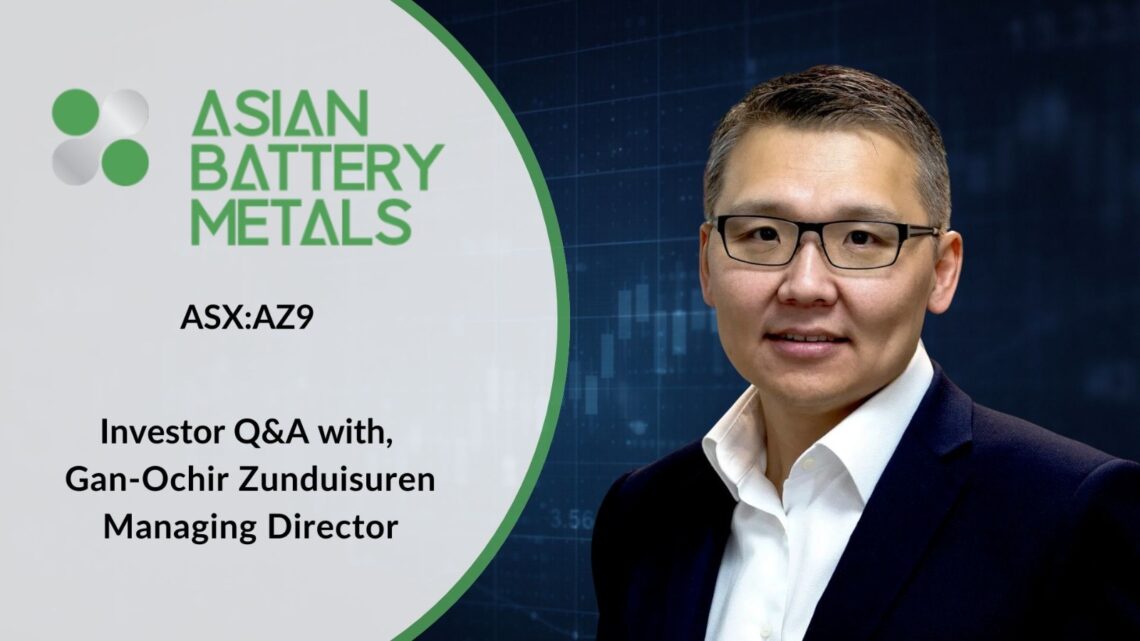
May 27, 2026Gan-Ochir Zunduisuren, Managing Director of Asian Battery Metals, spoke with MarketOpen to further clarify the significance of the latest drilling results from the Red Hill Cu Au Project in Mongolia, where recent drilling extended the known massive sulphide zone beyond 155m of strike and continued to define mineralisation across multiple target areas.
The discussion centred on what the latest drilling changed in terms of continuity, how drilling and gravity work are being sequenced to improve targeting discipline, and where pending assays, gravity interpretation and follow up drilling fit within the next stage of project evaluation. While the release remains focused on exploration results, the broader relevance lies in how multiple workstreams are being used to progressively improve geological definition and support more focused targeting decisions.
What does extending strike beyond 155m change in confidence around continuity, and what still remains unproven pending assays?
We view the extension beyond 155m of strike as an important step in building confidence that Red Hill is not a single isolated intercept. MU2604 extended massive sulphide mineralisation a further 60m west of MU2601, while MU2603 confirmed massive sulphide approximately 75m above MU2502. Together, those results provide a stronger basis to assess continuity of massive sulphide zone across the known mineralised zone.
It also supports the view that the system remains open along strike and at depth. What it does not yet prove is grade, economic significance, or true scale. The release is clear that the current observations are visual, and visual estimates are not a substitute for laboratory assays where grade is the key commercial measure.
Our immediate focus is to receive the pending assays for MU2602, MU2603 and MU2604, then integrate those results with drilling, geophysical and geological data to refine the next areas for testing.
How materially do MU2602, MU2603 and MU2604 validate the broader Red Hill system beyond earlier drilling?
All 3 holes intercepted copper mineralisation, while MU2603 and MU2604 confirmed visually copper rich massive sulphide mineralisation and extended the known mineralised zone to over 155m of strike. The massive sulphide intercepts were not accounted in past historic exploration, which adds a confidence in our understanding and modelling of the Red Hill VMS system.
MU2603 validated the downhole EM conductor plate modelled from MU2502 and intersected 21.9m of massive sulphide mineralisation, which improved confidence in continuity within that part of the system. MU2604 extended massive to semi massive sulphide mineralisation west of MU2601, while MU2602 tested the eastern extension and returned further mineralised intervals.
Collectively, this provides broader geological and spatial confirmation that mineralisation is present across multiple positions within Red Hill. Assays remain pending, and our next step is to integrate those results with geophysical and geological data to refine targeting and better define scale and continuity.
How is drilling and gravity work being sequenced to improve targeting discipline before further capital is deployed?
We are sequencing drilling and gravity work as complementary steps to improve targeting precision before committing further follow up drilling. The current drilling program is providing direct information on where mineralisation is present, with MU2602, MU2603 and MU2604 all contributing new geological information across the Red Hill system.
That work helps establish physical continuity and identify areas that warrant further evaluation. In parallel, a gravity survey has commenced across the project to help further define the scale and continuity of the massive sulphide mineralisation.
In practical terms, this supports more disciplined targeting by combining drilling observations with geophysical data before refining the next priority areas. Our next step is to finalise and interpret the gravity survey, then integrate those results with the initial assay results from the 2026 drilling program, alongside geological and geophysical data.
We are also continuing drilling and planning RC drilling to test shallow gold mineralisation identified in MU2501.
What uncertainties around scale, grade and continuity still need to be resolved before project risk is materially reduced?
We have improved our understanding of the Red Hill system, but key uncertainties around scale, grade and continuity still need to be resolved through the next stages of work. While MU2603 and MU2604 confirmed massive sulphide mineralisation and extended the known strike length beyond 155m, and MU2602 returned additional mineralised intervals, the broader extent of the system remains under active assessment.
On grade, assay results remain critical because the current release reports visual sulphide observations, and visual estimates are not a substitute for laboratory analysis where economic concentration is the principal commercial measure.
On continuity, further integration of drilling, geological and geophysical data is needed to better define how consistently mineralisation extends across target areas. On scale, the gravity survey now underway is intended to further define the size and continuity of the massive sulphide mineralisation.
Our next step is to integrate assay results, gravity interpretation and drilling data to refine target areas and progressively improve definition of the system before follow up work is prioritised.
Building definition through sequenced work
The focus now is on converting current drilling, geophysical and assay data into tighter project definition. For institutional investors, the significance of this phase is less about isolated intercepts and more about disciplined validation across strike, depth and broader system continuity.
The gravity survey, ongoing drilling and pending assay results are expected to refine priority target areas and improve targeting efficiency before subsequent follow up work is prioritised.
Within the scope of the current release, Asian Battery Metals continues to move through a structured exploration pathway where each workstream is designed to improve definition, reduce uncertainty and strengthen geological understanding required for the next stage of evaluation.
Please note the following valuable information before using this website.
Independent Research
Market Open Australia is intended to be used only for educational and informative purposes, and any information on this website should not be taken as investment advice or guidance. It is important to conduct your own research before making any investment decisions, which should be based on your own investment needs and personal circumstances. Any investment decisions based on information contained on this website should be taken in line with independent financial advice from a qualified professional or should be independently researched and verified.

