
Podium Minerals (ASX: POD) confirms Processing Breakthrough at Parks Reef
March 12, 2026Podium Minerals has reported metallurgical test work from the high grade hanging wall zone at its Parks Reef Platinum Group Metals Project in Western Australia, with the results strengthening confidence in the project’s potential development pathway and the commercial potential of the broader deposit.
The test work demonstrates that higher grade material can deliver improved concentrator flowsheet performance and generate higher concentrate grades while maintaining solid recovery outcomes through the processing approach being developed for the project.
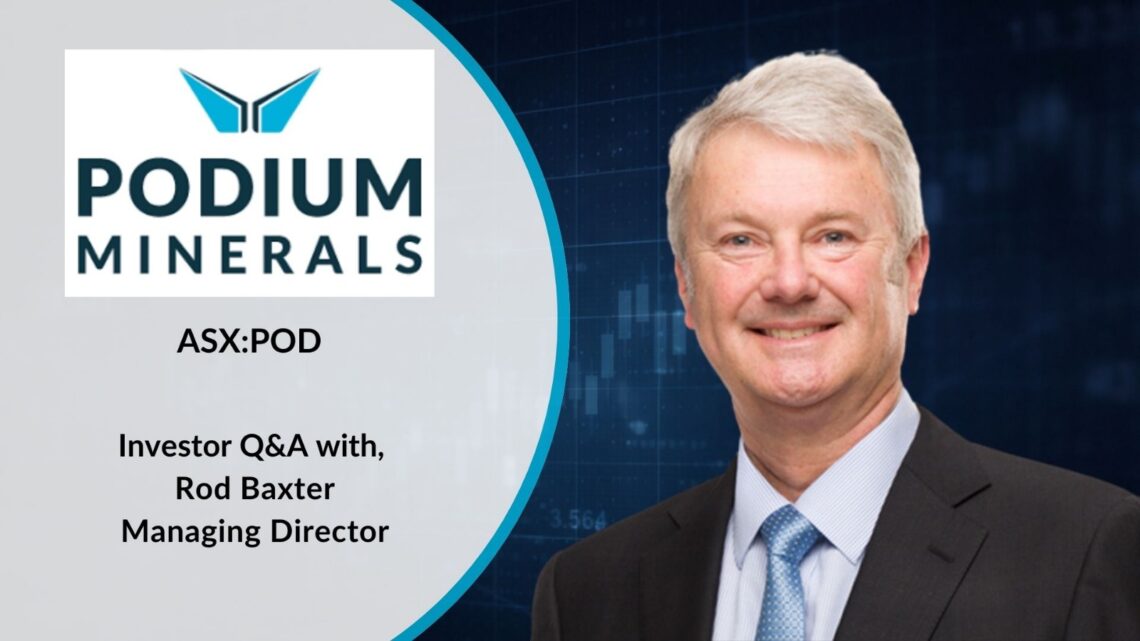
Managing Director Rod Baxter spoke with MarketOpen to answer key investor questions in relation to the latest metallurgical results, the implications for the Parks Reef development pathway, and how the company is building technical confidence as it advances one of Australia’s largest platinum group metals resources.
How do the hanging wall metallurgical results change the development outlook for Parks Reef?
The latest results strengthen our confidence that the processing strategy being developed for Parks Reef can work across different parts of the deposit.
Most importantly, the work has affirmed the natural metallurgical and grade leverage that exists within the distinct mineralised zones at Parks Reef. The latest outstanding results for the hanging wall feed through our concentrator confirms for us that the project has significant flexibility in how feed may be sourced. This optionality is important and will be leveraged further as development planning progresses.
Our recent test work demonstrates that higher grade hanging wall material can be processed through the same flowsheet used in earlier work on the bulk sulphide material, delivering strong recoveries and substantial improvements in concentrate grades.
For us the key point is confirmation rather than introducing a new concept, because the results show that the system performs consistently as additional parts of the mineralised sequence are tested.
From a development standpoint this provides a more reliable base for planning, by reducing the risk that processing performance depends on one specific part of the deposit. The outcomes demonstrate that our concentrator flowsheet is robust and supports our ability to incorporate higher grade zones when considering how the project could be scheduled and evaluated in future development studies.
What does producing a ~115 g/t 3E concentrate with ~73% recovery demonstrate about the project’s processing potential?
Producing a concentrate grade of around 115 g/t 3E while recovering approximately 73 percent of the key PGM metals confirms that the processing approach can generate high value products from the material tested at Parks Reef, demonstrating that the system can effectively concentrate the metals while maintaining solid recovery across the process. More importantly, the flowsheet produces a high-grade concentrate product.
From a commercial perspective this outcome matters, because higher grade concentrate products are generally better suited to downstream refining, have higher attraction as feed to the existing refineries, and can support stronger payability outcomes, confirming that the processing pathway under evaluation can produce concentrate quality consistent with established refining markets.
It also shows that higher grade feed zones within the deposit can translate into higher grade products, which is an important consideration when assessing how the resource may ultimately be developed.
The result provides an important point of validation for the processing strategy currently being advanced.
How does validating the concentrator flowsheet across multiple mineralised zones reduce development risk at Parks Reef?
The most important outcome is that we now have evidence the processing pathway performs consistently when applied to different mineralised horizons within the deposit, with earlier work demonstrating strong outcomes when treating bulk sulphide material and the latest results confirming the same approach also performs effectively when testing higher grade hanging wall material.
For a project at this stage, that type of consistency matters enormously, because it shows the strategy is not dependent on one specific sample type or one part of the resource, but instead indicates that our processing approach can operate across the system.
From a development perspective, this reduces a key area of uncertainty by supporting the view that material from different zones can be incorporated into, and accommodated in, the same processing strategy.
Commercially, this creates greater flexibility when evaluating how the deposit might ultimately be developed, as being able to consider multiple parts of the system within the same framework builds significant confidence in our concentrator flowsheet.
What are the key technical or study milestones required to move from these metallurgical results toward a development pathway?
The next stage is focused on expanding the dataset, so we better understand how the processing strategy performs across the very large Parks Reef deposit.
Our recent work confirms strong outcomes from both bulk sulphide and high-grade hanging wall material, and the focus now is to continue testing the other zones so we build a broader and more representative picture of how the system performs.
The current stage of work is aimed at strengthening confidence and verifying the performance of the concentrator. Testing more material and refining how different parts of the system work together allows us to build the information required to support future project studies.
At the same time, we continue to deliver further flowsheet and performance optimisation of the concentrator, and refine product specifications, assessing how these outcomes translate into potential market payability.
From Podium Minerals perspective the objective is straightforward.
Each stage of testing expands the technical foundation required for development planning and brings the project closer to the point where formal studies support our development pathway to advance Parks Reef.
Current work focused on expanding performance confidence
The latest metallurgical results add another layer of confidence to the technical work underway at Parks Reef.
By confirming consistent outcomes across different parts of the deposit, the program strengthens the foundation required to assess development options while continuing to build the dataset needed for future study work.
As further testing progresses across additional zones, Podium expects to continue refining its understanding of how the project will be advanced and how the scale of the resource will be developed.
Please note the following valuable information before using this website.
Independent Research
Market Open Australia is intended to be used only for educational and informative purposes, and any information on this website should not be taken as investment advice or guidance. It is important to conduct your own research before making any investment decisions, which should be based on your own investment needs and personal circumstances. Any investment decisions based on information contained on this website should be taken in line with independent financial advice from a qualified professional or should be independently researched and verified.

