
Critical Resources (ASX: CRR) advances solvent free cathode manufacturing pathway
March 6, 2026Critical Resources Limited has reported a technical milestone in its solid state battery evaluation program after validating Dry Supersonic Deposition as a solvent free pathway for producing lithium iron phosphate cathodes while preserving active material integrity.
The laboratory scale work establishes a repeatable manufacturing baseline and addresses a key uncertainty around whether a solvent free process can produce a functional electrode without compromising performance.
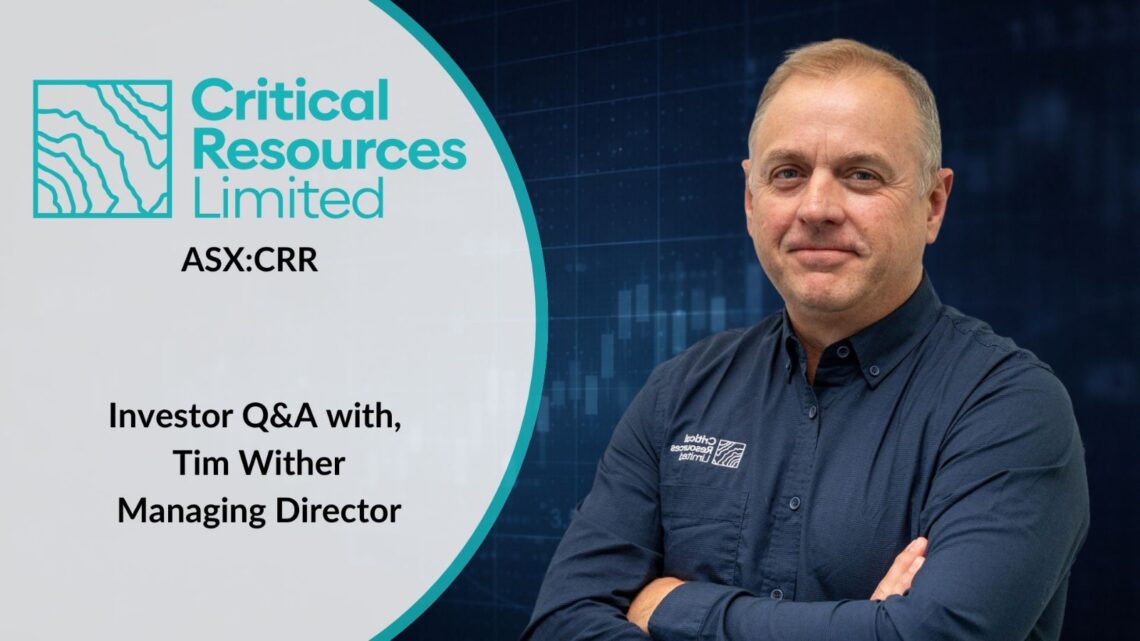
Managing Director Tim Wither spoke with MarketOpen to address key investor questions regarding the commercial significance of the result, the remaining development milestones, and how the battery technology program fits within the company’s broader capital allocation framework.
The discussion focuses on what has now been validated, what remains unproven at this stage, and how the company is sequencing the next phase of technical work in a disciplined manner while maintaining balance sheet flexibility.
What key technical risk does this DSD cathode validation remove for the solid state battery program?
The central uncertainty was whether this manufacturing approach could produce a cathode without damaging the material that determines battery performance. If the internal structure of that material changes during manufacturing, the electrode may appear functional but behave unpredictably when used inside a battery system.
Our testing confirms that the cathode can be produced using this solvent free approach while maintaining the integrity of the active material and forming a stable bond with the current collector. In practical terms that demonstrates the process can produce a working electrode rather than simply a laboratory coating.
From a development perspective that removes an important early stage risk and establishes a repeatable manufacturing baseline that allows the program to progress. It does not yet demonstrate commercial scale production or long term durability, but it confirms the manufacturing concept can produce a functional cathode that can now be evaluated in more integrated battery configurations.
How important is the ability to tune cathode performance through deposition parameters and heat treatment?
It is important because different battery applications require different operating characteristics. Some systems prioritise energy efficiency and stable long duration operation, while others require stronger tolerance to faster charging and discharging cycles.
Our work shows that the behaviour of the cathode can be influenced through how the electrode is produced and treated after deposition. In practical terms this means the manufacturing pathway can be adjusted to suit different operating requirements without changing the underlying material itself.
From a development standpoint that flexibility allows us to align the manufacturing approach with the type of applications we ultimately want to evaluate. It also helps us understand where the process may have the most practical relevance.
At this stage the work demonstrates controllability rather than commercial readiness. What it enables is a manufacturing pathway where performance can be deliberately shaped during production, which becomes increasingly important as the program moves toward application focused evaluation.
What are the next technical milestones required to move from laboratory validation to prototype development?
The immediate focus is on strengthening the technical dataset behind the initial validation and refining the operating conditions that define how the cathodes are produced. That means establishing stable process parameters so the electrodes can be manufactured consistently rather than as isolated laboratory outcomes.
At the same time we are expanding the performance testing so we understand how the cathodes behave across a wider range of operating conditions and over longer operating cycles. That information is required before the technology can be evaluated in a more integrated battery structure.
Another step is assessing how broadly the manufacturing pathway can be applied across other cathode materials. That work helps determine whether the process may have wider relevance beyond the material used in this phase of testing.
Only once those stages are completed does it become meaningful to combine the cathode with a solid state electrolyte layer. That integration work is the stage where early prototype battery structures can begin to be evaluated.
How does this battery technology program fit within the company’s broader capital allocation strategy?
The program is structured to remain disciplined and capital light while we evaluate whether the technology pathway has long term relevance. Rather than building internal development capability we are working within an established research framework that provides access to specialised facilities and expertise.
That structure allows the company to advance the technical work while keeping capital commitments modest and linked to clear technical milestones. Each stage of the program is designed to answer a specific development question, and decisions about progressing the work are made as those questions are resolved.
From a portfolio perspective this means the battery work does not displace the company’s focus on its critical minerals assets. Instead it operates as an option based technology pathway that can be advanced methodically without creating balance sheet pressure.
The objective is to progress the work in a measured way, generate the technical data required to guide development decisions, and determine where the technology may ultimately sit within future battery manufacturing systems.
Development pathway moves to next technical phase
The validation reported this week represents an early stage technical milestone rather than a commercial outcome, but it provides a clearer foundation for the next phase of development. With a repeatable cathode manufacturing baseline now established, the program moves into a stage where the focus shifts to refining the process, expanding the performance dataset and testing how the technology behaves within more complete battery structures.
As those milestones are delivered Critical Resources expects to gain a clearer view on the role this manufacturing pathway may play within future battery systems. The objective is to progress the work in a measured way, generate the technical data required to guide development decisions, and determine where the technology may ultimately sit within future battery manufacturing systems.
Please note the following valuable information before using this website.
Independent Research
Market Open Australia is intended to be used only for educational and informative purposes, and any information on this website should not be taken as investment advice or guidance. It is important to conduct your own research before making any investment decisions, which should be based on your own investment needs and personal circumstances. Any investment decisions based on information contained on this website should be taken in line with independent financial advice from a qualified professional or should be independently researched and verified.